‚TRADITION AND EVOLUTION IN NATIONAL LEGAL SCIENCE’
DISCUSSED IN THE CONTEXT OF THE INTERNATIONAL DAY OF GIRLS AND WOMEN IN SCIENCE
It has already become a tradition that, within the framework of the international scientific conference ‘Yesterday’s Cultural Heritage – Implications in the Development of Tomorrow’s Sustainable Society’, organized in the context of the International Day of Girls and Women in Science, with sections held in the cities of Iasi – Chișinău – Bucharest – Lviv, the thematic section ‘Tradition and Evolution in National Legal Science’ is also organized, which brings together the legal scientific community around topics relevant to the current socio-legal context.
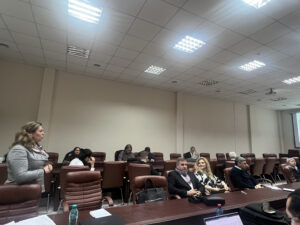
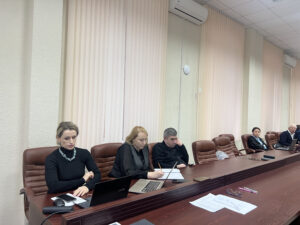
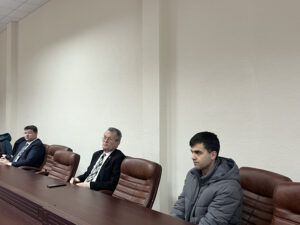
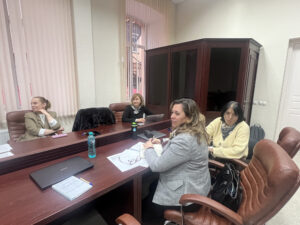
The Department of Public Law, Faculty of Law of the Moldova State University hosted the thematic section ‘Tradition and Evolution in National Legal Science’, an academic space for reflection and debate dedicated to the valorisation of legal heritage and the identification of modern solutions for contemporary legal challenges. This thematic section was held in a hybrid format, during which topical issues of major relevance for the evolution of society and the consolidation of the rule of law were discussed through the 22 reports and communications.
The section addressed topics of strategic importance for the development of the Republic of Moldova, especially in the context of current social, economic and institutional transformations. The discussions focused on essential topics such as integrity and legal education, which represent the foundation of the training of legal professionals and the indispensable condition for strengthening public trust in state institutions.
Particular emphasis was placed on the topics of legal and social security, concepts that reflect the stability of legal relations, the predictability of legal norms and the effective protection of human rights. In a context marked by rapid legislative changes and the dynamics of social relations, legal security becomes a pillar of the functioning of democracy and the protection of citizens.
At the same time, a major topical issue was the security of actors in the justice sector, including the protection of judges, prosecutors, lawyers and other participants in the process of administering justice. This topic is directly related to the independence of the judicial system and the capacity of institutions to function without pressure, intimidation or risks that could affect the act of justice.
Another thematic area of interest was the protection of the environment and natural heritage, which is gaining increasing relevance in relation to climate change and the need to implement sustainable policies. It was highlighted that environmental law is no longer just a secondary branch, but an indispensable field for guaranteeing a safe and balanced future for future generations.
The workshop also capitalized on modern perspectives on the case law of the European Court of Human Rights, as an essential tool in harmonizing national law with European and international standards, as well as its role in protecting fundamental freedoms.
At the same time, the challenges related to the digitalization of public services and the digital transformation of justice were discussed, a topic that reflects the need to modernize institutions and create efficient, transparent and accessible mechanisms for citizens. In this context, the impact of technological progress on law was also analysed, including the ethical and legal implications of the use of modern technologies.
The event has confirmed the essential role of international scientific dialogue in strengthening legal research and promoting democratic values, by combining academic tradition with modern research and innovation perspectives. The section held in Chisinau has demonstrated that legal science remains a fundamental tool for sustainable development, for the protection of human rights and for the consolidation of the rule of law.
The scientific sections are available at the link: https://asm.md/la-academia-de-stiinte-moldovei-va-fi-marcata-ziua-internationala-femeilor-cercetare