SUBSTANTIVE ACADEMIC DEBATES WITHIN THE PANELS OF THE INTERNATIONAL CONFERENCE “THE STATE, SECURITY AND HUMAN RIGHTS IN THE DIGITAL ERA” – 10th EDITION
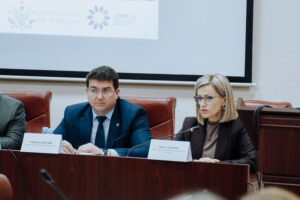
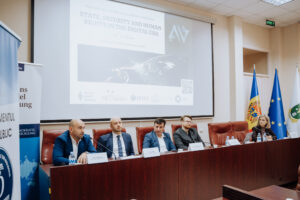
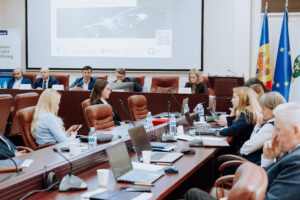
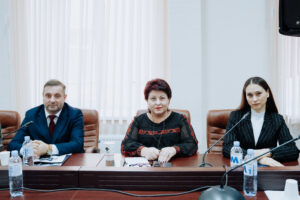
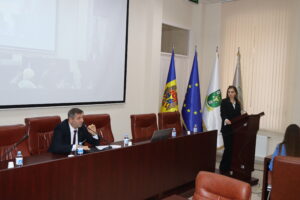
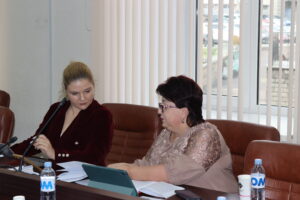
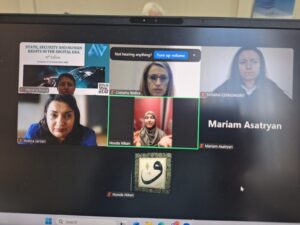
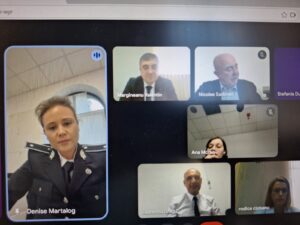
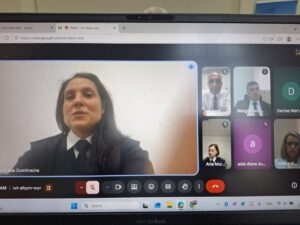
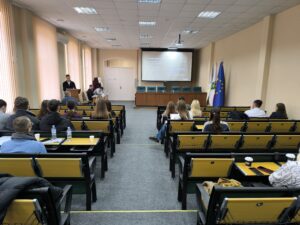
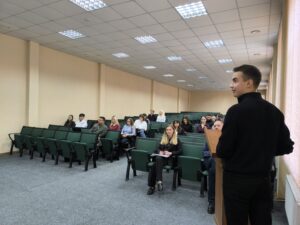
The scientific panels held as part of the International Conference “The State, Security and Human Rights in the Digital Era” (11–12 December 2025) formed the intellectual core of the event, providing a rich forum for critical reflection, comparative analysis, and interdisciplinary dialogue on some of the most pressing challenges facing contemporary society.
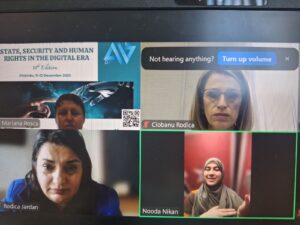
Organized over two days, with both in-person and remote participation, the proceedings brought together university faculty, researchers, doctoral candidates, students, experts, and representatives of public institutions from the Republic of Moldova and several European countries, thus reaffirming the international scope and academic relevance of the Conference.
The first day was dominated by issues related to national and human security, the role of public authorities, and the profound impact of digitalization on the rule of law.
A highlight of the day was the plenary session devoted to security, human rights, and hybrid warfare, during which international experts and representatives of key institutions in the Republic of Moldova examined new forms of threats, disinformation, the architecture of security risks, and the difficulty of maintaining a balance between freedom and protection in a volatile geopolitical context.
The debates continued with a round table dedicated to the use of unmanned aerial systems in national security and crisis management, where the focus was placed on intersectoral cooperation, the adaptation of the regulatory framework, and the need to align national legislation with international standards and best practices.
In the second part of the day, the Conference proceeded with parallel panels, each reflecting a distinct dimension of the overarching theme:
- The panel “Authorities and Institutional Commitments to Strengthening Security and Human Rights Protection Mechanisms” addressed the role of the state in safeguarding fundamental rights, the border as a space of balance between freedom and security, electoral rights, social justice, decision-making transparency, and the impact of European law on the legislation of the Republic of Moldova.
- The panel devoted to sustainable strategies for economic well-being and citizens’ financial resilience discussed financial education, tax compliance, public policies aimed at social equity, and the direct link between economic security and the effective exercise of human rights.
- The panel “Digitalization in Contemporary Society: Between Advantages and Disadvantages” focused on artificial intelligence, digital health, personal data protection, online hate speech, disinformation, and digital sovereignty, highlighting the risks of digital transformation unaccompanied by adequate legal safeguards.
- The panel “Innovation, Regulation and Responsibility in the Digital Era” completed the first day’s agenda by examining how new technologies require a rethinking of legal responsibility and of mechanisms for the protection of fundamental rights.
The second day of the Conference deepened the normative and comparative dimensions of human rights, with particular emphasis on the relationship between security, sanctions, and the legal protection of the individual.
- The panel “The Dilemma of Human Rights: Between Security and Sanctions” generated substantial debate on the proportionality of administrative and criminal sanctions, state coercion, procedural guarantees, and the risks of instrumentalizing security to the detriment of fundamental rights.
- The panel “Contemporary Transformations in Private Law: National and Comparative Perspectives” brought together analyses of developments in civil, commercial, and labor law in the context of digitalization, highlighting both convergences and tensions between national legal systems and European standards.
- The panel “Women’s and Children’s Rights in the Digital Era” brought to the forefront the protection of vulnerable groups, the right to education, privacy and online safety, the best interests of the child, and the impact of digital technologies on gender equality and social inclusion.
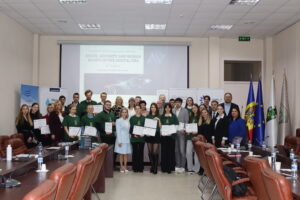
Special emphasis was placed on the Young Researchers’ Workshop – “Human Rights and Democracy in the Digital Era: Challenges and Opportunities”, which offered students and master’s candidates from the Republic of Moldova and partner European universities the opportunity to present their research on artificial intelligence, digital surveillance, deepfakes, electoral integrity, data protection, e-government, and cybersecurity.
Through the density of its themes, the diversity of perspectives, and the high academic level of the contributions, the Conference panels confirmed the event’s status as a mature academic platform capable of generating ideas, warnings, and solutions to the real challenges of digital society. The dialogue between academia, experts, and institutional representatives strengthened the Conference’s role as a space for critical reflection and applied expertise, relevant both to research and to the public decision-making process.